
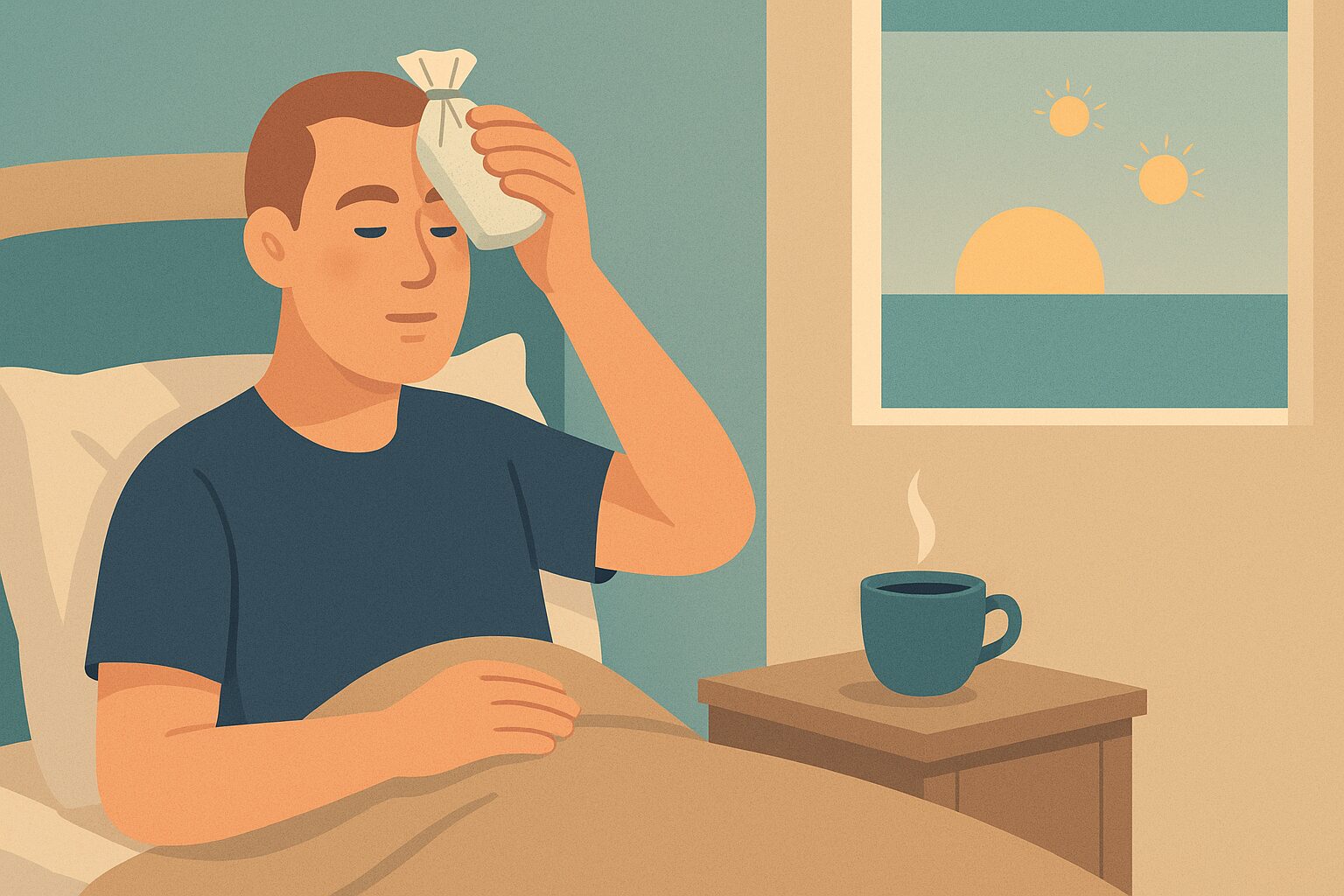
Swelling of the forehead and around the eyes after a hair transplant is common, usually appears on day two or three, peaks around day three to four, and clears by day five to seven. It is caused mainly by the fluid injected under the scalp during surgery draining downward with gravity, not by infection or a problem with the grafts.
Its severity depends far more on how much fluid was used and how you sleep than on how the surgery went, which is why the same clinic sees patients with none and patients with closed eyes.
Few things alarm a new transplant patient more than waking on the third morning with a puffy forehead and eyes that are half shut. It looks like something has gone badly wrong, it arrives just as the scalp itself is starting to feel better, and it is almost never mentioned in the promotional photographs. This guide from HairX Clinics explains what the swelling is, why it follows the timeline it does, what reduces it, and the small number of signs that mean a call to the clinic rather than patience.
What is the swelling made of?
Mostly water. During a transplant the surgeon injects a large volume of dilute solution under the skin of the recipient area. It has three jobs: it carries the local anaesthetic, it contains adrenaline to limit bleeding, and it lifts the skin away from the deeper tissue so that incisions can be made at a controlled depth without damaging what lies beneath. On a full frontal and mid-scalp procedure that can add up to several hundred millilitres of fluid sitting in the loose tissue plane under the scalp.
The scalp cannot absorb that volume quickly. The loose connective tissue under the skin of the scalp is continuous with the loose tissue of the forehead, the eyelids and the bridge of the nose, and there is nothing to stop fluid moving along it. Gravity does the rest. Over two or three days the fluid tracks forward and down, from the recipient area into the forehead, then into the eyelids, and occasionally as far as the cheeks.
A smaller contribution comes from the body’s inflammatory response to thousands of tiny incisions, which draws additional fluid into the area during the first days. The two together are the swelling. Neither is infection.
Why does it appear on day three and not day one?
Patients often reason that if surgery caused it, it should be worst on day one. The delay is the fluid travelling. On the day of surgery the scalp itself is tight and full. Overnight and through day one the fluid begins to move forward. By day two it has reached the forehead. By day three it has settled into the eyelids, which have the loosest tissue on the face and show fluid most dramatically. From day four the body reabsorbs it and the swelling clears, usually from the top down, so the eyes are the last to return to normal.
| Day | What is typical | What helps |
|---|---|---|
| Day of surgery | Tight, full scalp; little visible facial swelling | Sleep semi-upright from the first night |
| Day 1 to 2 | Forehead begins to feel heavy; slight puffiness | Headband if the clinic provides one; keep head elevated |
| Day 3 to 4 | Peak: puffy forehead, swollen eyelids, sometimes bruising around the eyes | Cold compress on forehead and eyes only, never on grafts |
| Day 5 to 7 | Clearing; eyelids last | Continue elevation; gentle activity |
| Beyond day 7 | Should be gone. Persistent or worsening swelling is unusual | Contact the clinic |
Our day-by-day recovery guide places the swelling in the context of everything else happening that week.
Why do some patients swell and others not?
Here is the point that is rarely explained: the amount of swelling says almost nothing about the quality of the surgery, and a great deal about four other things.
- Volume of fluid used. Larger sessions and frontal work need more. A 3,000-graft hairline and mid-scalp procedure injects far more than a 1,000-graft crown, and the crown is further from the face in any case.
- Location. Hairline and temple work sits directly above the forehead. Crown work often produces little or no facial swelling because the fluid has further to travel and tends to drain backward.
- Sleeping position. Lying flat lets fluid pool forward overnight. Patients who sleep propped at 30 to 45 degrees for the first three nights swell noticeably less.
- Individual tissue. Some people simply have looser periorbital tissue and swell more from any cause. Older patients and those who bruise easily tend to show it more.
Some clinics add a small dose of corticosteroid to the injected solution or give a short oral course afterwards to limit inflammatory swelling. Whether to do so is a medical judgement based on the patient’s history; it is not something to request or to worry about if it is not offered.
What actually reduces it?
You cannot prevent fluid that is already under the scalp from existing, but you can influence where it goes and how fast it leaves.
- Elevation. The single most effective measure. Sleep and rest with the head raised well above the heart for at least the first three nights. A recliner or a wedge of pillows both work.
- A soft headband. Worn across the forehead just below the hairline, it can slow the forward movement of fluid into the eyelids. Many clinics provide one. It must never press on the grafts.
- Cold compresses on the forehead and eyes. Cold reduces inflammatory swelling and is comfortable. Apply to the forehead, brow and closed eyelids only. Ice must never touch the transplanted area, where cold can compromise graft survival.
- Gentle movement. Walking helps circulation and drainage. Bending forward, heavy lifting and anything that raises pressure in the head do the opposite.
- Limiting salt. A modest effect, but reducing salt for the first few days may slightly reduce fluid retention.
- Avoiding alcohol and heat. Both dilate vessels and can prolong swelling.
What does not help: massaging the forehead toward the scalp, taking diuretics without medical advice, or using anti-inflammatory painkillers that thin the blood in the first days unless the clinic has approved them.
When is swelling a warning sign?
Ordinary post-operative swelling is soft, symmetrical or nearly so, painless apart from tightness, and follows the timeline above. A small number of features suggest something else and justify contacting the clinic the same day.
- Swelling that is hot, red and tender, particularly if it is worsening after day four, or is accompanied by fever. That pattern suggests infection, which is uncommon but needs prompt treatment.
- Swelling on one side only, or a firm lump under the scalp, which can indicate a collection of blood rather than fluid.
- Swelling that closes the eyes completely or affects vision. Usually still benign, but it should be reviewed.
- Any swelling of the lips, tongue or throat, or difficulty breathing, which is not post-operative swelling at all and needs emergency care.
- Swelling still increasing after a week.
If you are recovering abroad, this is where a clinic’s follow-up arrangements matter. Our guide on follow-up after a hair transplant abroad explains what a reachable clinic looks like.
Does swelling affect the grafts?
Ordinary swelling does not harm the grafts. The fluid is under the scalp and moving away from the recipient area, and the grafts sit above it in the skin. What can harm them is what people do about the swelling: pressing a headband too high, holding ice against the transplanted zone, rubbing the forehead upward, or sleeping face down to avoid pressure on a swollen brow. Treat the swelling on the face, leave the grafts alone, and both will be fine. The transplanted hairs themselves will shed over the following weeks regardless, which is the normal cycle and is described in our guide on shock loss and post-operative shedding.
Is it normal for the swelling to bruise around my eyes?
Yes. As fluid drains into the eyelids it can carry a small amount of blood from the surgical area, producing yellow or purple discolouration under the eyes around day three to five. It fades over a week.
Can I go to work with the swelling?
Physically, yes, for most desk work. Whether you want to be seen with it is another matter. Patients who need to be presentable often book the procedure before a long weekend or take days two to five off.
Should I take antihistamines or steroids for it?
Only if the clinic prescribes them. Some surgeons use a short course of corticosteroid; antihistamines do not help this type of swelling. Do not self-medicate.
I had no swelling at all. Did the surgery use less fluid than it should?
No. Absence of swelling is common with crown work, smaller sessions, patients who sleep well elevated, and simply individual variation. It is not a sign of anything wrong.
Will swelling happen again if I have a second session?
Possibly, and it tends to be similar to the first time for the same area. Knowing your own pattern lets you plan elevation and time off.