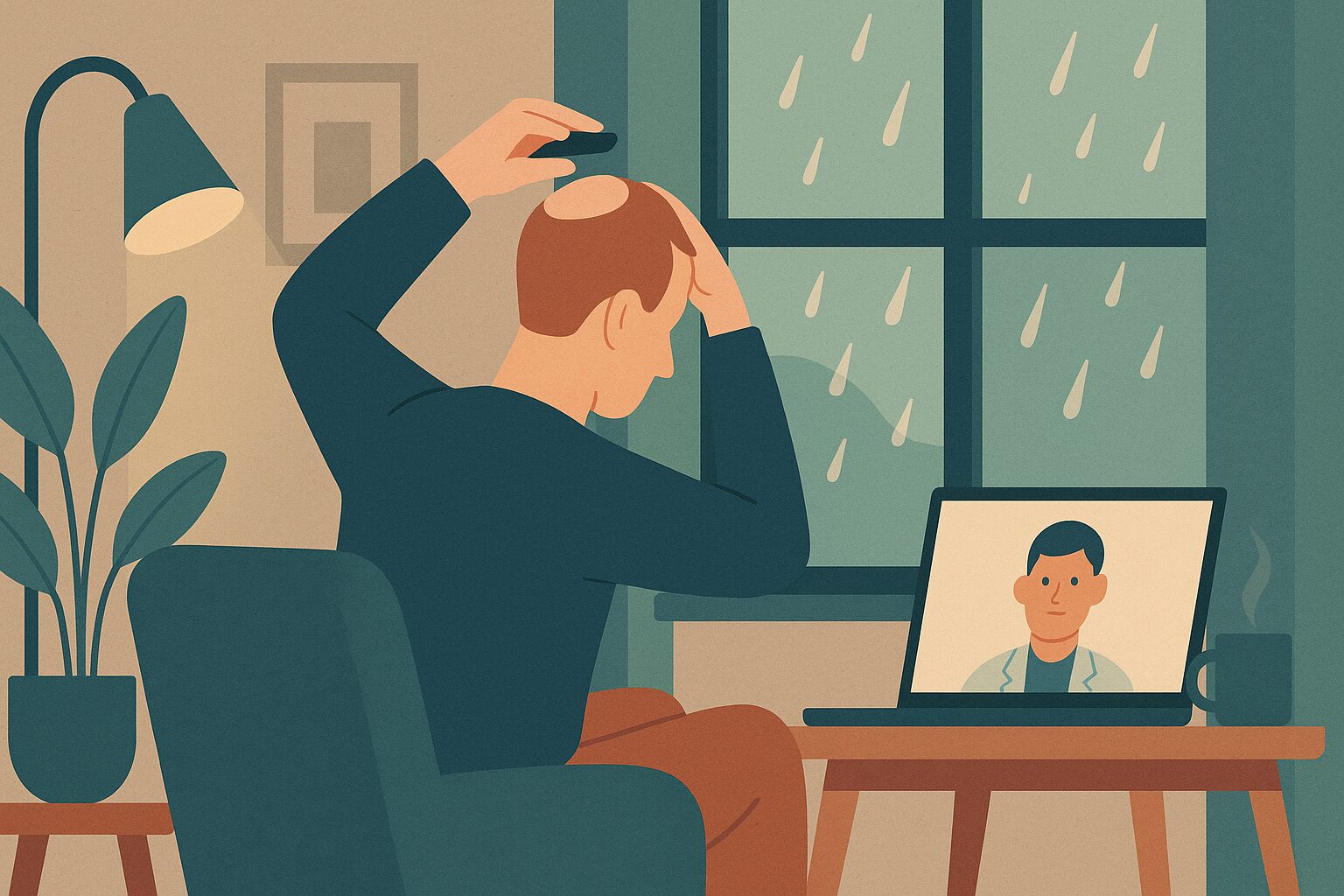
Aftercare abroad works when it is scheduled before you fly, not requested after you land. The useful structure is four checkpoints — week 2, month 3, month 6 and month 12 — each with standardised photographs reviewed by the operating surgeon, plus a named contact for anything urgent in the first fortnight.
The surgery takes a day. The result takes a year. Almost every complaint about transplants abroad comes from that gap, not from the operating theatre.
Patients research surgeons exhaustively and aftercare almost not at all — and then spend eleven and a half of the twelve months that matter at home, alone with a process nobody has explained to them. This guide from HairX Clinics sets out what remote follow-up should actually consist of, what you can and cannot resolve by video, and when you need a doctor in the same room.
What should the follow-up schedule look like?
Ask for this in writing before you pay a deposit. A clinic that cannot describe its follow-up structure has not built one.
| Checkpoint | What is being assessed | Format |
|---|---|---|
| Days 1–14 | Healing, crust removal, signs of infection, washing technique | Named contact on a live channel, same-day response |
| Week 2 | Crusts cleared, redness settling, donor area healing | Photographs plus a short video review |
| Month 3 | Shedding complete, early regrowth beginning | Standardised photographs, surgeon review |
| Month 6 | Coverage emerging, texture still immature | Standardised photographs, surgeon review |
| Month 12 | Density and hairline assessed against the original plan | Full photographic set, formal comparison to the pre-op plan |
The twelve-month checkpoint is the one that matters contractually. It is the point at which the result can fairly be compared to what was planned, and the point at which any revision conversation properly begins.
How do I take photographs a surgeon can actually use?
Most remote reviews fail on photography, not medicine. A surgeon cannot assess density from a phone snap taken under a bathroom downlight at a different angle each time.
- Same five angles every time. Front, top-down, left, right, back of the donor area.
- Same light. Daylight near a window, no direct overhead spotlight — downlights create shadow that reads as thinning.
- Dry hair, no product. Wet or styled hair exaggerates density in both directions.
- Same distance. Roughly arm’s length, phone held level with the area, no zoom.
- Keep the set. A folder per checkpoint is worth more at month 12 than any memory of how things looked.
Why does month four feel like a disaster?
Because it genuinely looks worse than before surgery, and that is the timeline working correctly.
Transplanted follicles shed their hair shafts within the first weeks and enter a resting phase before producing new growth. Meanwhile the existing native hair around the recipient area can shed temporarily from surgical trauma. The two coincide somewhere around weeks 8 to 16: the new hair has not arrived, and some of the old hair has left. Our guide to shock loss explains the mechanism, and the month-by-month results guide shows where it sits in the sequence.
This is the moment when patients abroad panic, post on forums, and conclude the surgery failed. A clinic with real follow-up pre-empts it — telling you in advance that month four will be the low point, so that when it arrives it is a prediction being confirmed rather than a catastrophe being discovered.
What needs a doctor in the same room?
Remote review handles progress. It does not handle acute problems. Seek local medical attention rather than waiting for a video call if you experience:
- Spreading redness, heat or pus in the recipient or donor area, particularly after day five.
- Fever in the first two weeks.
- Pain that increases rather than decreases after day three.
- Bleeding that does not stop with ten minutes of gentle pressure.
- Swelling that affects vision or does not begin settling by day five.
Tell the clinic at the same time — but do not let the time zone delay you seeing someone locally. Any competent clinic would rather you were examined promptly by a local doctor than wait for their office to open.
Start with a plan you can hold the result against
Our free AI hair analysis returns a per-zone graft plan, a written surgical rationale and a four-frame projection of day 1, month 3, month 6 and month 12, as a PDF you keep. That PDF is also the document to compare against at your twelve-month review.
What should I tell my own GP?
Tell them before you travel, not after something goes wrong. Your GP should know the date, the clinic, the procedure, and any medication you have been prescribed — finasteride in particular, because it interacts with how PSA results are interpreted and belongs in your record.
Hair restoration is not routinely available on the NHS, as we explain in can you get a hair transplant on the NHS, and your GP is not responsible for managing an elective procedure performed privately overseas. But they can examine a suspected infection, prescribe antibiotics, and document what happened — which matters considerably if a dispute ever follows.
When is it fair to raise a revision?
At twelve months, against the written plan — not at month four against your hopes.
A fair revision conversation compares three things: the graft count and zone distribution that were planned, the photographs at month 12 in matched conditions, and the clinic’s stated position on revision agreed before surgery. Density that falls materially short of the plan, or a hairline that does not match the design you approved, is a legitimate basis. Slower-than-hoped maturation at month 8 is not. We cover the full process, including what recourse looks like from another country, in what happens if the result is poor and you are back home.
How soon after surgery can I fly home?
Most surgeons prefer you stay for a first wash and a check, typically two to three nights. Flying itself is not the problem; missing that first check is.
Can the clinic prescribe medication remotely?
A clinic can advise, but a prescription generally needs a doctor licensed where you live. Plan for this before you travel if you will be starting finasteride or minoxidil.
What if I stop hearing from the clinic?
This is why the named contact and the written schedule matter before you pay. If communication stops, document your attempts in writing — that record is what any complaint to a regulator or syndicate will rest on.
Is it worth returning in person at twelve months?
If you are considering a revision or a second session, yes. Density and donor capacity are assessed far more reliably in person than from photographs.
See your result before you book. A full year of it, from photos on your phone.
HairX shows you a twelve-month AI preview of your result and an estimated graft count before you speak to anyone. It is free and it takes minutes. The report covers your stage of hair loss, what your donor area can realistically give, and how the result comes in month by month, including the third month, when it looks worse before it gets better.