
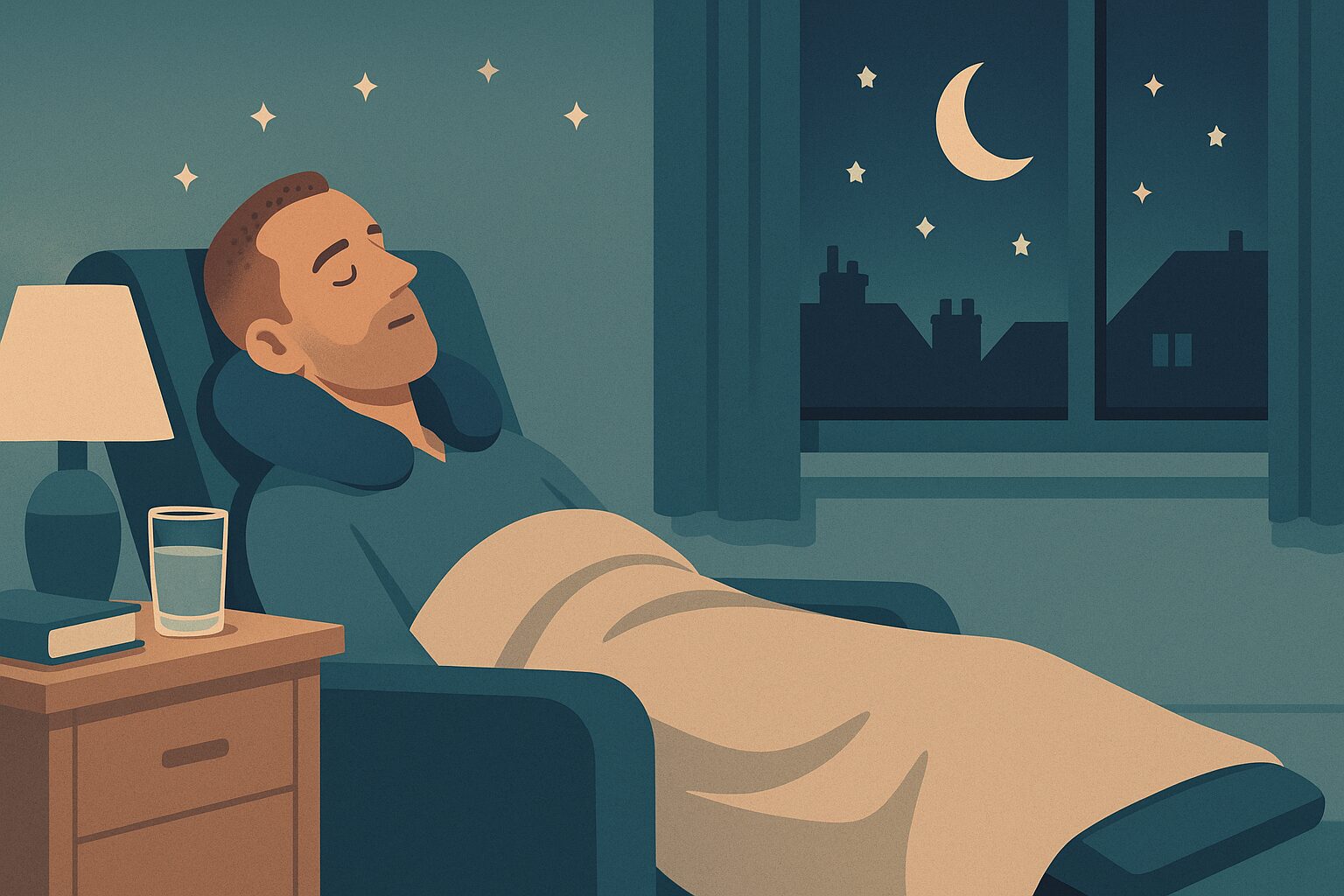
For the first three nights sleep on your back with the head raised to about 30 to 45 degrees; for nights four to ten you can lower the pillows but must still keep the transplanted area off the pillow. From about night ten the grafts are anchored and normal sleep positions are safe, though the donor area may stay tender a little longer.
The two rules serve different purposes, and most patients conflate them: elevation is for swelling, and back-sleeping is for the grafts.
Sleep is the part of recovery patients worry about most and control least. Awake, you can avoid touching your head. Asleep, you roll over, drag a pillow across the hairline, and wake convinced you have undone the surgery. The reassuring truth is that grafts are more robust than most people fear after the first few days, and the practical truth is that a few adjustments make the first ten nights straightforward. This guide from HairX Clinics sets them out night by night.
Why are there two different rules for sleeping?
Aftercare sheets tend to give sleep instructions as one list, which is why patients follow all of them for too long or drop all of them too early. There are two separate concerns with two separate timelines.
The first is swelling. The fluid injected under the scalp during surgery drains forward into the forehead and eyes over the first three or four days, and lying flat lets it pool there overnight. Sleeping propped up is the most effective way to limit facial swelling, and it matters most on nights one to three. Our article on swelling after a hair transplant explains the mechanism.
The second is the grafts. A freshly placed graft sits in its incision held by nothing more than the clot forming around it and the snugness of the channel. In the first 48 to 72 hours it can be dislodged by friction or pressure. By day five it is held by early tissue growth; by day ten it is anchored well enough that ordinary contact with a pillow does no harm. Protecting the grafts is about avoiding contact, and it matters through night ten, whatever your swelling is doing.
The counter-intuitive consequence is that the patient who feels fine on night four, swelling gone, and returns to sleeping on his side with the hairline in the pillow, has stopped following the rule that still applies. And the patient still sleeping bolt upright on night nine is following a rule that stopped applying a week ago, and losing sleep for nothing.
What should each night look like?
| Nights | Position | Elevation | Why |
|---|---|---|---|
| 1 to 3 | On your back only | 30 to 45 degrees | Grafts are loose; swelling is forming and draining forward |
| 4 to 5 | On your back; side-sleeping only if the transplanted area is nowhere near the pillow | Can reduce; one or two pillows is enough | Swelling is clearing; grafts still vulnerable to friction |
| 6 to 10 | Back or side; avoid face-down and avoid dragging the head across the pillow | Normal | Grafts anchoring; crusts loosening and should not be rubbed off |
| 10 onward | Any position that is comfortable | Normal | Grafts secure; donor may still be tender for a few more days |
Crown transplants add a complication, because the crown is exactly where the back of the head meets the pillow in back-sleeping. For crown work, a travel pillow or a neck roll that supports the neck while leaving the crown suspended is the usual solution, and side-sleeping may be advised earlier than in the table.
How do I set up the bed?
- A recliner or a wedge. A reclining chair set at around 45 degrees is the easiest way to sleep elevated without sliding down. Failing that, a foam wedge under the mattress or a stack of firm pillows works, provided the elevation comes from the torso up and not just from bending the neck.
- A neck pillow. A U-shaped travel pillow keeps the head from rolling and, for crown patients, lifts the recipient area clear of the surface.
- Clean, smooth pillowcases. Change them nightly for the first week. A smooth cotton or silk case creates less friction than a textured one if you do drift onto your side.
- A towel over the pillow. Some oozing from the donor area is normal on the first nights, and a towel saves the bedding.
- Nothing over the head. No hats, hoods or beanies in bed for the first week. If the clinic has fitted a light dressing over the donor area, follow its instructions on when to remove it.
- Sleep alone if you can for the first three nights, or at least with enough room that a partner cannot roll onto the pillow.
What if I wake up on my face?
It happens, and the outcome is almost always fine. Grafts that have been dislodged bleed visibly; you would see a spot of fresh blood on the pillow and a small bleeding point on the scalp. If the pillow is clean and the scalp looks as it did the night before, nothing has moved. A single lost graft among two or three thousand makes no visible difference to the result, and the body will not lose more than a handful even in a bad night, because grafts are seated individually and contact tends to affect only the area under direct pressure.
What to do: do not touch or inspect the area with your fingers; look in a mirror or take a photograph; if there is fresh bleeding, press very gently with clean gauze for a minute or two and leave it; and if you are unsure, send the photograph to the clinic. What not to do is decide that since some contact has occurred, the rules no longer matter. They do, for the remaining nights.
The crusts that form around each graft from about day three are a separate matter. They will loosen and come away during washing over the following week, and our guide on day-by-day recovery covers the washing routine. A crust that comes off on the pillow on night eight has usually taken nothing with it. A crust rubbed off on night three might.
What about the donor area?
The donor area at the back and sides is where most of the sleeping discomfort actually comes from. Thousands of small extraction sites, each a tiny wound, are pressed against the pillow all night in the very back-sleeping position the grafts require. The area is tender for the first few nights and can ooze slightly.
A soft, folded towel or a very soft pillow under the back of the head helps. Some patients find a neck roll that lifts the head off the surface entirely more comfortable. The donor area is not at risk from pressure the way the grafts are, so comfort is the only consideration. By the end of the first week it is usually no more than mildly tender, and by two weeks most patients have forgotten about it.
When can I sleep normally again?
From about night ten, any position is safe for the grafts. Some surgeons say seven days, some say fourteen; ten is a reasonable middle and the exact figure depends on the technique used and on how the scalp has healed. If crusts have all come away and the recipient area looks pink and smooth, the grafts are anchored. If crusts remain, wait until they have gone. The transplanted hairs themselves will start to shed from around week two to four, which is normal, described in our guide to what happens month by month, and has nothing to do with how you slept.
Can I sleep on my side if only my crown was treated?
Often, yes, and it may be preferable, since back-sleeping puts the crown directly on the pillow. Your surgeon will advise based on exactly where the grafts were placed. Keep the treated area clear of the surface for the first ten nights whichever position you use.
Do I really need to sleep upright for the whole night?
Elevated, not upright. A 30 to 45 degree incline is enough, and it is needed for about three nights to limit swelling. After that, elevation is optional; keeping the grafts off the pillow is not.
Is a sleeping tablet safe after a hair transplant?
If the clinic prescribes one, yes. It is common for the first night or two. Do not combine it with alcohol, and do not take anything the clinic has not approved.
I woke up with blood on the pillow. Have I lost grafts?
Possibly one or a few, or possibly none, since the donor area oozes normally on the first nights. Check the recipient area in a mirror for a fresh bleeding point. A handful of lost grafts among thousands does not affect the result.
When can I wear a hat to bed or use a hood?
Not in the first week. After that a loose, clean hat is usually fine when awake; in bed it is unnecessary and can trap heat and moisture around the healing scalp.