Most clinics clear patients to fly from around three days after surgery, once the first wash has been done and the grafts have begun to anchor. Many people could physically fly sooner; that is not the same as it being wise.
The risk is not the aircraft. It is the hundred small contacts a journey involves — the headrest, the overhead locker, a shoulder in a crowded aisle.
Patients ask about cabin pressure, and it is almost never the thing that matters. This guide from HairX Clinics explains what actually makes a flight risky in the days after a transplant, when it stops being risky, and how to get through the journey without undoing work you have paid for.
Does cabin pressure affect the grafts?
This is the question almost everyone arrives with, and the honest answer is that it is the wrong thing to worry about. Aircraft cabins are pressurised to the equivalent of a moderate altitude — roughly comparable to standing on a mountain road. People recovering from a hair transplant sit at that altitude on the ground, in cities all over the world, without anything happening to their grafts.
Cabin air is dry, which can make a healing scalp feel tight and itchy, and that is a genuine minor nuisance. But a graft is not dislodged by air pressure or by dry air. It is dislodged by being touched.
So what is the actual risk of flying?
For the first days after surgery, each graft sits in a channel that has not healed around it. It is held by a clot. Friction or direct pressure on the recipient area can move it, and a graft that is moved in that window does not simply reseat itself — it is lost, along with whatever it would have grown.
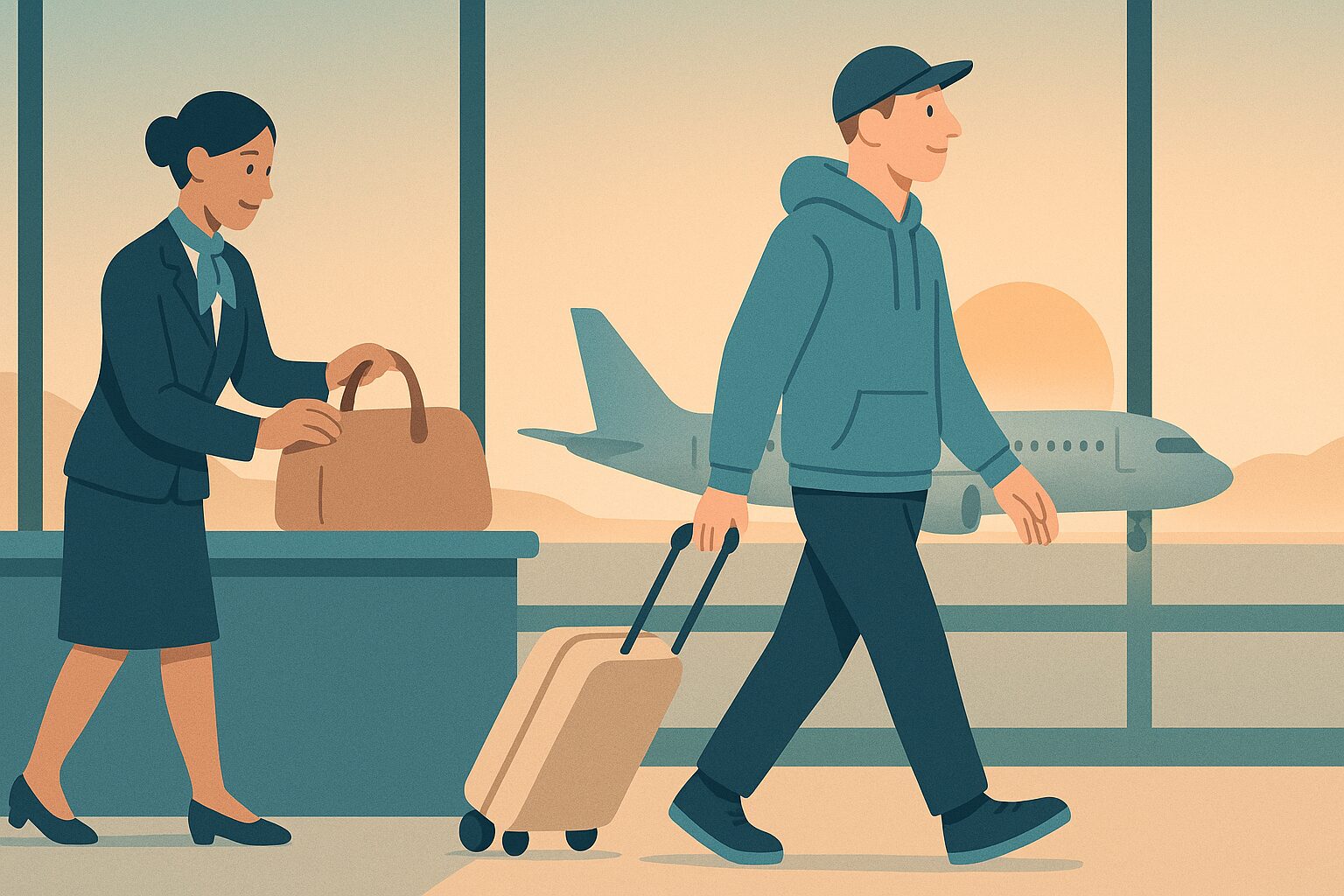
A journey is unusually rich in exactly that kind of contact. Consider what a normal trip to the airport involves.
| Moment | What can go wrong | What to do instead |
|---|---|---|
| Security and boarding | Crowds, jostling, people reaching past your head | Ask for assistance or priority boarding; do not queue in a scrum |
| Overhead lockers | Lifting a bag brings your scalp under a hard edge | Check the bag, or ask cabin crew to lift it |
| Seating | Leaning back puts the recipient area onto the headrest | Sit upright; a neck pillow holds the head clear |
| Sleeping | You cannot control what you lean on once asleep | Stay awake on a short flight; use a neck pillow on a long one |
| Headwear | Pulling a cap on or off drags across every graft | Wear nothing, or only what the clinic gives you, fitted by them |
| Arrival | Carrying luggage, car doorframes, taxi headrests | Arrange a transfer; travel light |
When is it safe to fly?
Clinics differ, and the right answer for you should come from the surgeon who operated, not from an article. As a general pattern, patients travelling home are usually cleared once the first wash has been done and the initial healing is under way, which for most people falls around the third day. That is also why the trip to Egypt is planned as several nights rather than two — the length of the stay is set by this window, not by the operation.
Two things move the date. A very large session, or one that produced marked swelling, may warrant an extra day. And a flight that involves a long connection, an overnight leg or a great deal of carrying is not the same proposition as a four-hour hop, even on the same calendar day.
- Ask for the clearance in writing. Not “you will be fine” — a date, and what it depends on.
- Have the first wash done before you go. It is the one part of aftercare worth learning in person.
- Book a changeable fare. If the clinic wants you to stay another night, the decision should not cost you a new ticket.
- Take the written aftercare with you. Including a named contact who answers once you are home.
Does a long-haul flight change the answer?
It changes the practicalities more than the biology. A longer flight means more hours in which you may fall asleep against something, more dryness, and more time in a fixed position. It also usually means a connection, which means a second boarding queue and a second round of luggage.
None of that makes flying unsafe at the point your clinic has cleared you. It does mean that a patient facing twelve hours and a transfer should think harder about the aisle seat, the neck pillow and checking the bag than a patient facing four hours direct. For Gulf and UK patients, Cairo is a direct flight from most major airports, which is one of the quieter advantages of the destination.
Plan the journey around the surgery, not the other way round
Our free hair analysis takes five photographs and returns an estimated graft count for every zone of your scalp, a visualisation of day one, month three, month six and month twelve, and a PDF you keep. It also tells us how large your session is likely to be — which is what sets your travel dates.
How do you get through the flight itself?
Nothing about this is complicated. It is a matter of deciding in advance, because the day of travel is not when anyone makes careful decisions about their own head.
Travel with hand luggage you can carry on a shoulder rather than lift overhead, or check it. Take an aisle seat so nobody climbs past you. Sit up, and use a horseshoe neck pillow — its whole purpose is to hold your head off the headrest, which is exactly what you need. Drink water, since cabin air is dry and a tight, itchy scalp invites the one thing you must not do, which is scratch. And if the crew need to know why you are moving carefully, tell them; asking for help with a bag is easier than explaining a lost graft later.
Above all, do not put on a cap that the clinic has not fitted. Pulling a hat on and off is the single most common way patients damage their own grafts on the way home. If you need head covering for sun or privacy, ask the clinic for something loose and be shown how to put it on.
Will flying make the swelling worse?
Swelling across the forehead is common after a transplant and typically peaks in the first few days before settling on its own. Sitting still for hours can make any swelling feel more pronounced, and dry cabin air does not help, but flying is not a cause of it.
What helps is what helps on the ground: staying upright rather than reclining, keeping fluids up, and following whatever your clinic has told you about sleeping position for the first nights. If swelling appears suddenly days later, spreads beyond the forehead, or comes with pain, fever or discharge, that is not a travel question — contact the clinic. Our day-by-day recovery guide describes what is normal at each stage, and our guide to follow-up after surgery abroad covers who to contact once you are home.
Can I wear a hat on the plane?
Only if the clinic has given you one and fitted it. An ordinary cap has to be pulled on and off, and that drag across the recipient area is the risk — not the hat sitting there.
What if I fall asleep on the flight?
That is the reason for the neck pillow. It holds your head off the headrest whether you are awake or not. On a short flight, staying awake is simpler.
Will airport security want to inspect my head?
Screening procedures vary by airport. If you are asked about dressings or head covering, explain that you have had a recent procedure; staff deal with this regularly.
Can I fly before the first wash?
Ask your surgeon. Many clinics prefer to do that wash themselves before you travel, because doing it wrongly is one of the few ways to damage your own result.
Is there a risk of infection from flying?
Flying itself does not introduce infection to the scalp. Touching your head with unwashed hands does, which is worth remembering in an environment full of shared surfaces.
See your result before you book. A full year of it, from photos on your phone.
HairX shows you a twelve-month AI preview of your result and an estimated graft count before you speak to anyone. It is free and it takes minutes. The report covers your stage of hair loss, what your donor area can realistically give, and how the result comes in month by month, including the third month, when it looks worse before it gets better.