
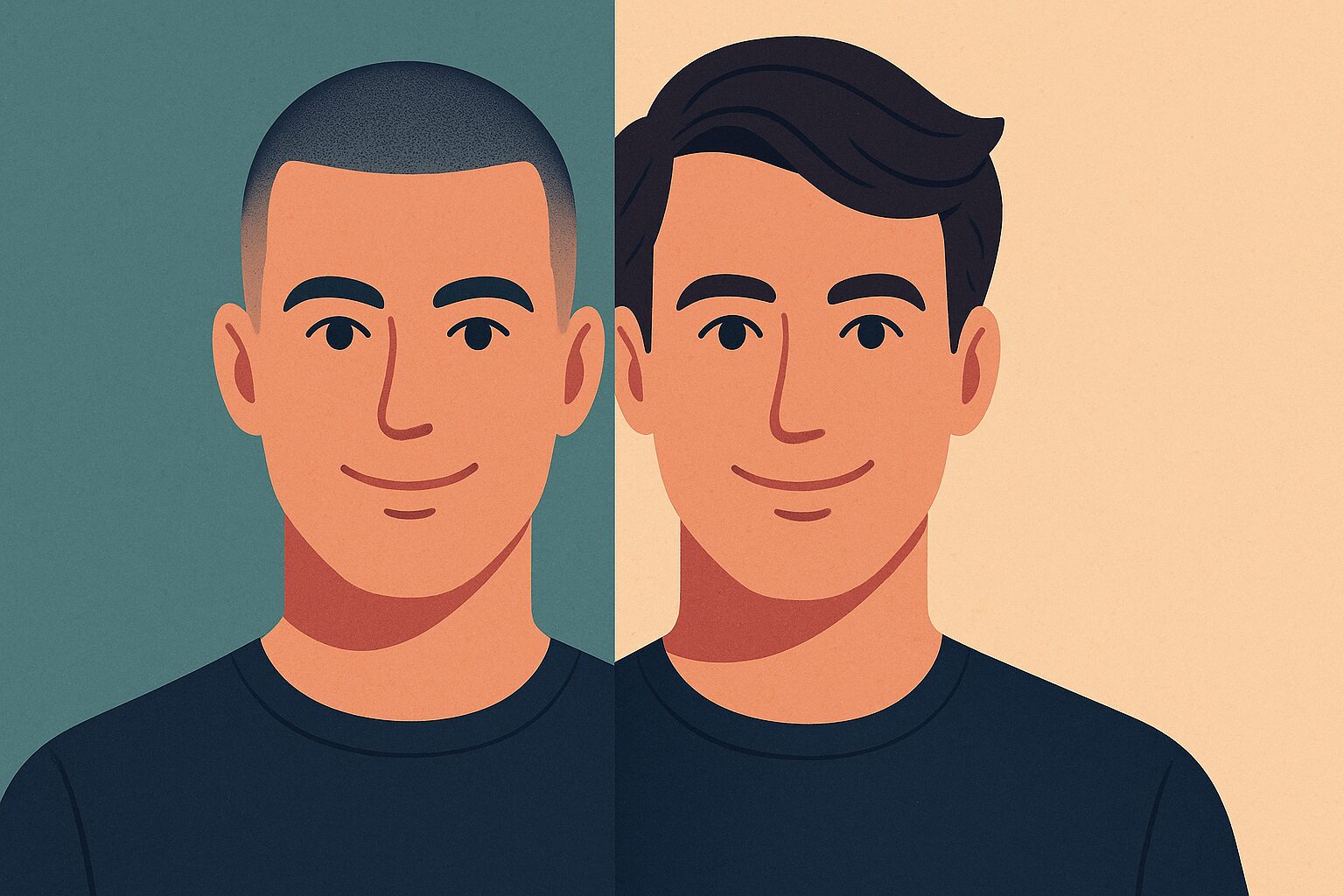
A hair transplant moves living follicles that grow, can be styled and last for years. Scalp micropigmentation deposits pigment in the scalp to mimic the look of shaved stubble — it adds no hair and no texture, only the appearance of density by reducing the contrast between scalp and hair.
The comparison most people get wrong is financial. A transplant is a purchase. SMP fades and needs periodic refreshing, which makes it closer to a subscription.
These two procedures get compared constantly, usually because SMP costs less up front. But they are not competing versions of the same thing, and treating them as interchangeable leads people to the wrong one. This guide from HairX Clinics sets out what each actually delivers, and where the two work far better together than apart.
What is scalp micropigmentation?
SMP is a cosmetic tattooing technique. A practitioner places thousands of tiny pigment deposits in the upper layer of the scalp, each sized and spaced to resemble a hair follicle seen through closely shaved skin.
Done well, it produces the look of a clean buzz cut on a full head of hair. It can also be applied more lightly across a thinning area, so that the scalp showing through existing hair is darker and therefore less visible. That second use is the one most people underestimate.
What it cannot do is equally important. There is no hair, so nothing grows, nothing can be styled, and the scalp stays smooth to the touch. Under close inspection or strong light, a trained eye can tell. And because the body gradually breaks pigment down, the effect softens over the years and needs topping up.
How do the two compare directly?
| Hair transplant | Scalp micropigmentation | |
|---|---|---|
| What it delivers | Living follicles that grow hair | The visual impression of density |
| Texture | Real hair you can feel and style | Smooth scalp |
| Hair length possible | Any length | Requires very short hair |
| Time to final result | 12 to 18 months | Visible immediately, usually 2 to 3 sessions |
| Recovery | Days of visible healing, weeks of care | Minimal, mild redness for a few days |
| Longevity | Transplanted follicles are long-lasting | Fades gradually, needs refreshing |
| Limited by donor hair | Yes, strictly | No |
| Works on scars | Sometimes, depends on the scar | Yes, a common use |
| Reversible | No | Partly, via removal, which is slow |
| Cost pattern | Larger one-off | Lower up front, recurring |
Look down the longevity and cost rows together. Any comparison that puts a single SMP figure next to a single transplant figure is comparing a one-off to the first instalment of something ongoing. Over a decade the arithmetic can look very different from the quote on day one. What drives transplant pricing is covered in what a hair transplant actually costs.
Who suits which procedure?
SMP tends to suit someone who:
- Already wears their hair shaved or very short and is content to keep it that way.
- Has advanced loss with limited donor hair, where a transplant could not cover the area convincingly.
- Wants a visible result within weeks rather than a year.
- Has donor scarring from an older strip procedure or an over-harvested FUE donor area.
- Is not a surgical candidate for medical reasons, or does not want surgery.
A transplant tends to suit someone who:
- Wants hair they can grow and style, not a shaved look.
- Has a healthy, stable donor area with enough capacity for the area being treated.
- Has a defined region to restore, such as a receding hairline or temples, rather than diffuse loss everywhere.
- Can wait the better part of a year for the result to mature.
Donor capacity is usually the deciding factor, and it is a fixed budget rather than an adjustable one. That logic is set out in how many grafts do you actually need.
When does combining them make sense?
This is where SMP is most useful, and least discussed. Used alongside a transplant rather than instead of it, light pigmentation does something a transplant cannot: it darkens the scalp between the hairs.
Because visible thinness is largely a contrast effect — pale scalp showing through dark hair — reducing that contrast makes a given number of grafts read as denser than it is. For a patient whose donor area cannot supply everything the mirror wants, that can be the difference between an adequate result and a good-looking one.
The common combinations:
| Situation | Combined approach |
|---|---|
| Limited donor hair, wide area to cover | Transplant to the front, light SMP behind it to soften the transition |
| Visible donor scarring | SMP over the donor area so short hair can be worn again |
| Crown thinning with a good hairline | SMP shading in the crown instead of spending grafts there |
| Result matured but slightly see-through | Light SMP after 12 months, once growth is final |
Sequencing matters: pigmentation is normally considered after the transplant has fully matured, so that the shading is matched to the real final density rather than guessed at. Why the crown in particular is expensive in grafts is explained in our crown guide, and the permanence question in is a hair transplant permanent.
What should you think about before deciding?
- What hairstyle do you actually want in five years? This single question resolves most of the decision.
- Is your hair loss still progressing? Both options are affected, and medical treatment may belong first either way. See hair loss treatment: what works.
- What does maintenance look like? Ask how often refreshing is expected and what it costs each time, in writing.
- How will the pigment age? Ask to see the practitioner’s own work at three years and beyond, not just fresh results.
- Who is doing it? SMP is a skill-dependent cosmetic procedure with no universal standard. Dot size, depth and pigment choice separate convincing work from a grey smudge.
Is SMP painful?
Most people describe it as uncomfortable rather than painful, similar to tattooing, and topical numbing is commonly used. It is considerably less involved than surgery.
Will the pigment turn blue or green over time?
Poor pigment choice or placement that is too deep can cause colour shift and spreading. Reputable practitioners use pigments formulated for scalp work and place them shallowly, which is part of why practitioner selection matters so much.
Can I have a transplant after SMP?
Generally yes, though the surgeon needs to see your scalp clearly to plan. Tell any clinic about existing pigmentation at the consultation rather than on the day.
Does SMP work on women?
It can be used to reduce the contrast at a widening parting, though the shaved-head effect is not the goal. Female thinning has its own considerations, covered in hair transplant for women.
Is a hair system a third option?
It is, with its own trade-offs around maintenance and attachment. We compare it separately in hair transplant vs hair system.