
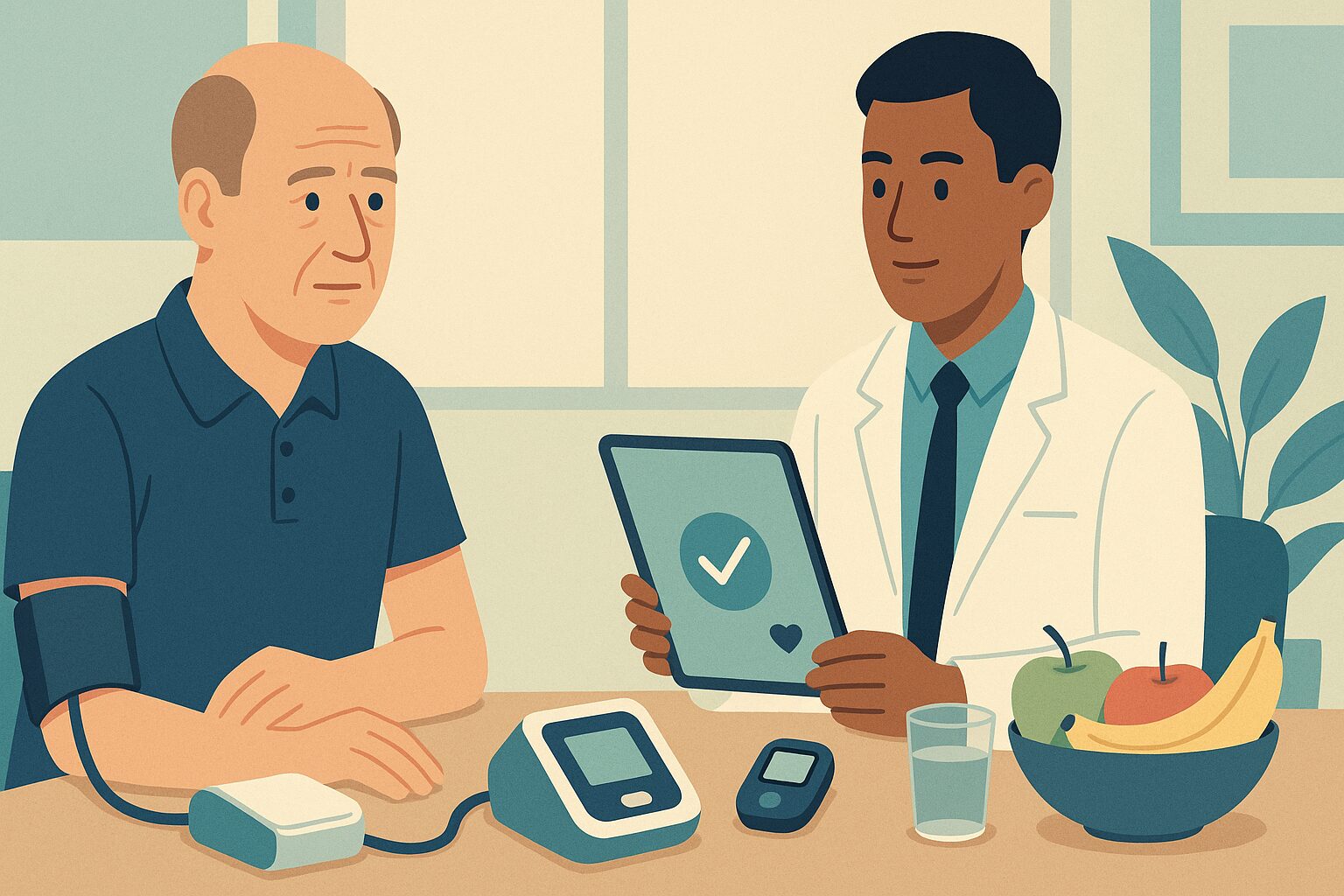
Well-controlled diabetes and well-controlled high blood pressure are not barriers to a hair transplant. What decides it is control on the day and in the months before: surgeons generally want a recent HbA1c and a blood pressure that sits reliably in a safe range, and they adjust the anaesthetic, the session length and the aftercare around each condition.
Poorly controlled disease is a reason to postpone, not to refuse for ever. The counter-intuitive point is that the anaesthetic solution, not the surgery, is what most often unsettles blood pressure.
Two of the commonest chronic conditions in Egypt and the Gulf are type 2 diabetes and hypertension, and a large share of men considering a hair transplant have one or both. Many have been told, informally, that the procedure is not for them. That is rarely true, but the conditions do change how a responsible clinic assesses, prepares and operates. This guide from HairX Clinics explains what changes, what the checks are for, and when the safe answer is to wait.
Why do these conditions matter for a minor procedure?
A hair transplant is minor surgery under local anaesthetic, with no general anaesthesia and no deep tissue involvement. It is also several hours long, involves thousands of tiny wounds in two areas of the scalp, uses an anaesthetic solution that contains adrenaline, and asks the body to heal and to supply new blood vessels to every graft over the following weeks. Diabetes and hypertension each touch one or more of those points. The procedure is still safe for most patients with either condition, but only when the clinic knows about it and plans for it.
What does diabetes change?
Diabetes affects a transplant in three ways, and each is manageable with control.
- Healing and infection. Raised blood sugar impairs the immune response and slows wound healing. Thousands of small wounds are a larger infection surface than a single incision, and slower healing can reduce graft survival.
- Blood supply. Long-standing diabetes can narrow small vessels. Grafts depend on new capillary growth, so microvascular disease can lower the proportion that take, particularly in the crown.
- The day itself. A six-to-eight-hour session with limited eating, on a patient taking insulin or sulfonylureas, carries a real risk of low blood sugar. That has to be planned, not improvised.
None of these forbids surgery. A patient whose HbA1c is in the range his physician considers well controlled, who has no active foot ulcer or other sign of poor healing, and whose medication regimen can be adjusted for the day, is a reasonable candidate. A patient whose diabetes is newly diagnosed, poorly controlled, or complicated by kidney or vascular disease is asked to bring it under control first.
What does high blood pressure change?
Hypertension matters less for healing and more for the procedure day, and the mechanism is not what most patients expect. The surgery itself is not particularly stressful to the circulation. The local anaesthetic is. Anaesthetic solutions used in hair transplantation contain adrenaline (epinephrine), added to reduce bleeding and to make the anaesthetic last. In the volumes used over a large scalp area, that adrenaline can raise heart rate and blood pressure, and in a patient whose pressure is already high the rise can be enough to matter.
Bleeding is the second issue. Higher pressure means more oozing at both donor and recipient sites, which slows the surgeon, makes it harder to seat grafts, and can dislodge grafts that have just been placed.
| Blood pressure on the day | What usually happens |
|---|---|
| In the range agreed with your physician | Procedure goes ahead with monitoring |
| Moderately raised, known hypertensive on treatment | Rest, recheck, possibly a dose of usual medication; proceed if it settles |
| Significantly raised or unstable | Postponed. Operating is not worth the risk, and the surgeon will say so |
| Raised in an undiagnosed patient | Referred for assessment first; a transplant consultation sometimes finds hypertension nobody knew about |
Ranges are deliberately not given as numbers here, because the threshold depends on age, other conditions and the medication a patient takes. The point is that a responsible clinic measures, has a threshold, and is prepared to send a patient home.
What will the clinic check before operating?
Expect a fuller pre-operative assessment than a patient without either condition would have. Our guide on what to ask at a consultation covers the general questions; for these conditions, add the following.
- A medical history covering duration of the condition, medications and doses, any complications, and any previous surgery and how it healed.
- Recent blood tests, typically including HbA1c and fasting glucose for diabetes, kidney function, and a full blood count. Blood pressure is measured at consultation and again on the day.
- A medication plan agreed with your physician: which drugs to take as normal on the morning of surgery, and which to adjust. Insulin and some oral diabetic drugs need specific instructions; blood-pressure medication is usually taken as normal.
- Anticoagulants and antiplatelets, which many hypertensive patients take. These may need to be paused, but only with the prescribing doctor’s agreement, never on the clinic’s say-so alone.
- Anaesthetic review. The doctor responsible for the anaesthetic should know about both conditions in advance, so that the solution, its adrenaline content and the total volume can be planned.
How is the procedure day adjusted?
For a diabetic patient, the day is built around glucose. Blood sugar is checked on arrival and at intervals during the session. Meals and snacks are scheduled rather than left to chance. Insulin doses are adjusted according to the agreed plan. Sessions may be shortened or split so that no single sitting is too long. Sterile technique, always essential, is treated with extra care, and antibiotic prophylaxis may be used according to the surgeon’s judgement.
For a hypertensive patient, the day is built around pressure. Blood pressure is measured on arrival and monitored through the session. The anaesthetic is given in stages with a lower adrenaline concentration where appropriate, and the total volume is kept to what the area needs. Bleeding is managed with patience rather than with more adrenaline. If pressure rises beyond the agreed threshold at any point, the procedure pauses.
Aftercare changes little, but the instructions on washing, sleeping position and avoiding exertion matter more, and our recovery guide sets them out day by day. Diabetic patients are asked to watch the donor and recipient areas more closely for signs of infection, and to keep glucose well controlled through the healing period, because that is when it affects graft survival most.
When would HairX postpone or decline?
Saying not yet is part of good practice. We would postpone or decline when diabetes is poorly controlled or newly diagnosed and not yet stable; when blood pressure on the day is above the agreed threshold and does not settle; when there is an active infection anywhere, a non-healing wound, or a history of poor wound healing; when the patient is on anticoagulants that cannot safely be paused; or when diabetic complications, particularly kidney disease or peripheral vascular disease, suggest that healing and graft survival would be compromised.
In almost all of those cases, the path back to surgery is the same: work with your physician to bring the condition under control, then return for reassessment. A postponed transplant with a good result is worth far more than a prompt one with a poor result or a complication.
Is the transplant itself riskier for a diabetic?
Slightly, mainly through infection and healing. With good control, the difference is small and manageable. With poor control, the risk of infection and lower graft survival rises enough that surgeons prefer to wait.
Should I stop my blood-pressure tablets before surgery?
Usually no. Most patients take them as normal on the morning of the procedure. Never stop or change medication on your own; the clinic and your physician agree the plan together.
Does diabetes reduce how much hair grows?
It can, through poorer blood supply to the grafts, especially in long-standing or poorly controlled disease. Good control before and after surgery is the best protection.
Can the adrenaline in the anaesthetic be avoided?
It can be reduced, and the solution given in stages, but a small amount is usually needed to control bleeding. The doctor responsible for the anaesthetic decides the concentration based on your history.
Do I need my physician’s approval?
We strongly recommend it. A short letter or report from the doctor managing your diabetes or hypertension, confirming control and listing medication, makes the planning safer and faster.