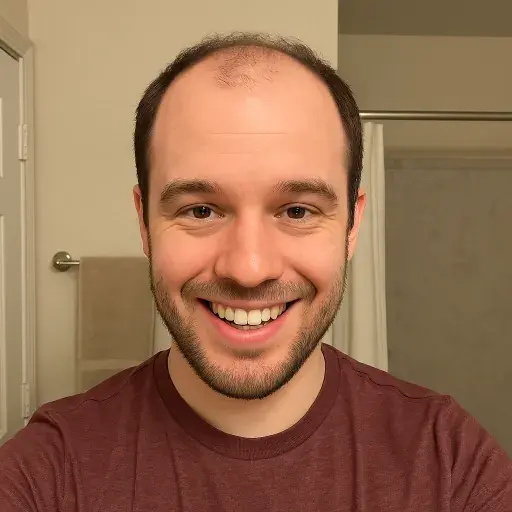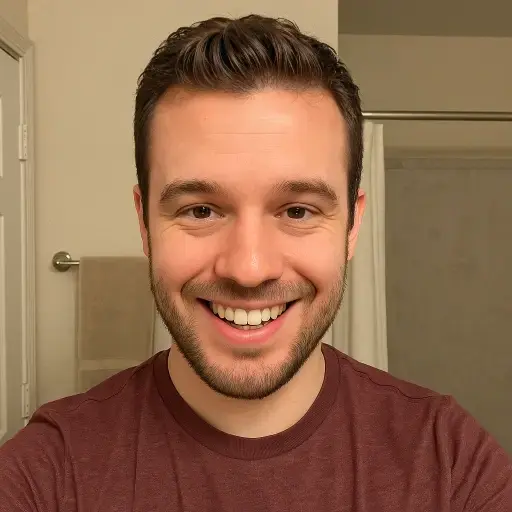

You can settle most of a hair transplant plan before you book a flight: your Norwood stage, an estimated graft range per zone, whether your donor area can fund it, and what a realistic twelve-month result looks like. All of it from photographs, at home.
Doing it in that order changes what the trip is for. You arrive to confirm a plan rather than to hear one for the first time, in a chair, in another country.
The worst position to be in is sitting in a consultation abroad, having already paid for flights, hearing a graft number for the first time. Every incentive in that room points towards saying yes. At HairX Clinics we built the free AI hair analysis to move that conversation earlier — to the point where you still have every option open, including walking away.
Why does the order of decisions matter?
A hair transplant involves one decision that cannot be reversed: how much of your finite donor area to spend, and where to spend it. Everything else — the technique, the clinic, the dates — is negotiable right up until the morning of surgery. That one is not.
Which means the decision deserves to be made when you are calm, at home, with time to read it twice and to get a second opinion, rather than at the end of a travel day with a deposit already paid. The sequence that protects you is: understand your case, agree a plan, then book travel. Our guide on travelling to Egypt for a hair transplant sets out the same order for the logistics.
What does the AI hair analysis actually return?
The analysis is free and runs from photographs you upload. HairX is the first clinic in the world to put this in patients’ hands before they book. It returns four things.
| Output | What it is | What you do with it |
|---|---|---|
| A four-frame visual timeline | Day one, month three, month six and month twelve | Calibrates expectations — particularly the flat months three and four |
| A per-zone graft plan | Estimated grafts split across hairline, mid-scalp and crown rather than one headline number | Lets you see where density is being spent, and question it |
| A written surgical rationale | Why that distribution, in plain language | The part you can take to a second opinion |
| A PDF you keep | All of the above, in one document | Yours to compare against what any clinic proposes, including ours |
The per-zone split is the part worth dwelling on. A single figure — “4,000 grafts” — tells you almost nothing. The same number distributed differently produces entirely different results, and a crown is a notoriously expensive place to chase density. Seeing the split is what lets you ask the right question, which is not “how many?” but “why there?”
What photographs does it need?
- Even, indirect light. Daylight near a window works. Overhead spotlights exaggerate thinning; flash hides it.
- Dry, unstyled hair. Product and damp hair both read as more density than you have.
- Several angles. Front, top looking down, both sides, and the back — the back is how the donor area gets assessed.
- No filters, no touching up. A flattering photograph produces a flattering plan, which helps nobody.
What can it not tell you?
This matters as much as what it does. An analysis from photographs is a planning instrument, not a diagnosis, and there are things no photograph can establish.
It cannot examine your donor density directly — the measurement a surgeon takes in person, which sets the true ceiling on what is available. It cannot tell you whether your hair loss is male pattern loss or something else that needs investigating first; several conditions mimic it, and some are treatable without surgery. It cannot assess whether you are medically fit for the procedure, which depends on your history and your medication. And it cannot promise an outcome — the timeline frames are an illustration of a realistic course, not a prediction of yours.
If your loss has come on suddenly, is patchy, or is accompanied by anything else unusual, the right first step is a doctor rather than a graft plan. Our guide to what actually works for hair loss covers the non-surgical ground, and the Norwood scale explains how pattern loss is staged.
How do you actually use the report?
Three ways, in increasing order of usefulness.
- As a reality check. If the twelve-month frame is less than you were imagining, that is the most valuable thing the report will do for you. Better now than at month twelve.
- As a basis for comparison. Take the per-zone plan to any clinic you are considering. If one proposes substantially more grafts, ask what it is funding and what it leaves in the donor area. A large number is a large withdrawal, and we explain why that matters in what actually goes wrong.
- As a second-opinion document. The written rationale is the part another surgeon can engage with. “They said 4,000” is not a second opinion. “They propose this distribution for these reasons” is.
You are welcome to take the report elsewhere. That is not a concession — a patient who understands their own case is a better patient to operate on.
Start with the plan, not the booking
The AI hair analysis is free, runs from your own photographs, and returns the per-zone graft plan, the written rationale and the four-frame timeline as a PDF you keep. No deposit, no flight, no commitment of any kind.
What still has to happen in person?
The report gets you to the consultation informed. It does not replace it. Three things can only be done with you in the room.
The donor area has to be examined directly, under magnification, to establish real density and confirm the plan is fundable. Your medical history and medication have to be gone through properly, because some of it changes whether or when surgery should happen. And the hairline has to be drawn on your actual head, with you holding a mirror, because a line that looks right on a screen can sit wrong on a face.
That last appointment is the decision point of the whole trip. Arriving at it with a plan you already understand is the difference between confirming a decision and being handed one. The rest of what the week covers is set out in what is included and what you arrange.
Is the AI hair analysis really free?
Yes, and it does not require a booking or a deposit. You keep the PDF whether or not you go any further with us.
Is it a diagnosis?
No. It is a planning tool based on photographs. It does not diagnose the cause of hair loss and does not replace examination by a doctor.
Can I show the report to another clinic?
Yes. It is yours. The written rationale is specifically designed to be something another surgeon can engage with.
How accurate is the graft estimate?
It is a planning estimate, not a quote. The figure is confirmed or revised at the in-person assessment, where donor density can actually be measured.
Is the tool available in Arabic?
The analysis interface is currently in English. Our team can walk you through the report in Arabic — message us on WhatsApp.
See your result before you book. A full year of it, from photos on your phone.
HairX shows you a twelve-month AI preview of your result and an estimated graft count before you speak to anyone. It is free and it takes minutes. The report covers your stage of hair loss, what your donor area can realistically give, and how the result comes in month by month, including the third month, when it looks worse before it gets better.